What is ADD and ADHD?
One of the most successful ways to address ADHD is through education. By learning about THIS TYPE OF NEURODIVERGENCE, something that becomes a lot easier when you tap into the wealth of ADHD resources available, you gain a greater understanding of how it affects you, your child, your spouse or family member. You also become more aware of what supports there are. You are NOT alone!
There are many types of resources for ADHD. Read on and explore everything from in-person support groups and conferences to websites and books. You can also find resources you can use to learn more about the benefits to which you or your child are entitled.
Yes, ADHD (Attention-Deficit/Hyperactivity Disorder) is recognized as a disability under U.S. federal laws like the Americans with Disabilities Act (ADA) and Individuals with Disabilities Education Act (IDEA), but only if its symptoms significantly interfere with one or more major life activities, such as learning, working, or communicating, requiring reasonable accommodations. Not everyone with ADHD qualifies, but those whose condition substantially limits daily functioning can receive legal protections and support in educational and employment settings.
When ADHD Qualifies as a Disability
To be considered a disability under the ADA, IDEA, or Section 504 of the Rehabilitation Act, you must demonstrate that your ADHD:
Causes substantial limitation:
The symptoms significantly impair major life activities, which include thinking, concentrating, working, learning, and communicating.
Is professionally diagnosed:
You need a formal diagnosis from a qualified professional like a physician, psychologist, or neuropsychologist.
Impacts daily functioning:
There's documented evidence of impairment in school, work, or other daily activities.
What This Means for You
Accommodations: You can request reasonable accommodations (like extended time for tests, modified work schedules, or assistive technologies) in schools and workplaces to help you succeed.
Legal Protection: You are protected from discrimination in employment and education.
Disability Benefits: In severe cases, individuals with ADHD may also qualify for Social Security Disability benefits (SSDI or SSI) if their impairment is severe enough to prevent substantial work.
ADHD vs. Learning Disabilities
ADHD is a neurodevelopmental disorder affecting executive functions (focus, organization, etc.).
It's not a learning disability (like dyslexia), but its symptoms often impact learning, and children with ADHD are sometimes more likely to have co-occurring learning disorders.
What is ADD ADHD NOT?
ADHD is NOT a character flaw, lack of willpower, or sign of low intelligence; it's a neurodevelopmental difference characterized by difficulties with either one or a combination of attention regulation, impulsivity, and/or hyperactivity, but it's also associated with strengths like creativity, and its symptoms often overlap with other conditions like anxiety, depression, and sleep disorders, making diagnosis tricky. It's a brain difference, not a deficit, meaning the brain works differently, not worse, and experiences vary widely.
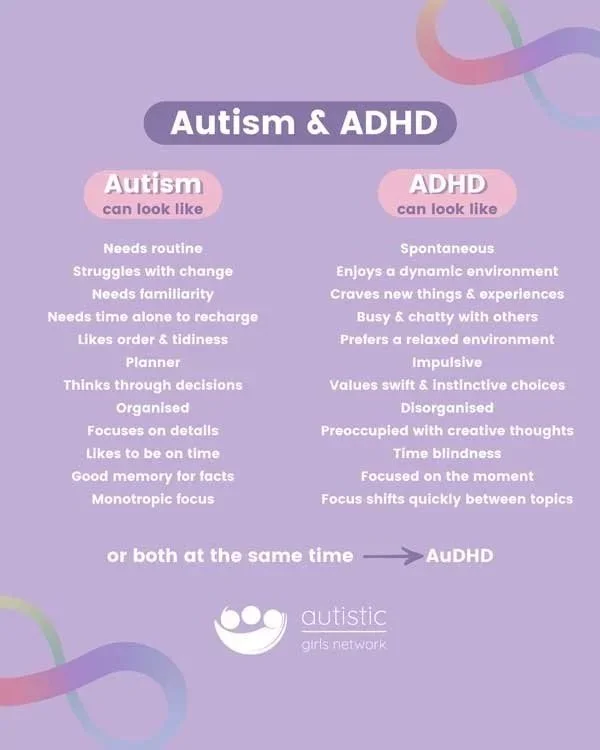
It's very common for autism and ADHD to co-exist, with substantial scientific evidence supporting this high comorbidity, say this NIH article and this NIH article.
What ADHD is NOT (Common Misconceptions):
A lack of intelligence or laziness: People with ADHD have average to above-average intelligence and often have unique strengths, like visual-spatial thinking.
Just hyperactivity: While hyperactivity is common, many (especially women and girls) have predominantly inattentive types, sometimes called "ADD" (an outdated term).
A mental illness: It's a neurodevelopmental disorder, a difference in brain structure and function, not a mental illness like depression or anxiety, though they often co-occur.
A deficit in attention: It's often an overabundance of attention that's hard to control, leading to being easily distracted or hyperfocused.
The same for everyone: Symptoms, severity, and experiences differ greatly from person to person.
What ADHD Often Gets Confused With:
Anxiety and Depression: Symptoms like poor focus, irritability, and inattention can mimic ADHD.
Sleep Disorders: Insufficient or poor-quality sleep can look just like ADHD in adults and children.
Learning Disorders: Difficulties with learning or processing information can overlap with ADHD.
Autism Spectrum Disorder (ASD): These conditions frequently co-occur and share some traits, requiring careful diagnosis.
In essence, ADHD isn't about not caring or not trying; it's about having a different brain wiring that affects executive functions like focus, organization, and emotional regulation.
National Support Organizations
CHADD—Children and Adults with ADHD
CHADD (chadd.org) is the largest national support organization for ADHD. It provides education, advocacy, and support for children and adults living with ADHD and their families, as well as teachers and healthcare professionals. CHADD offers programs and services locally and nationally. Every year CHADD hosts a conference where speakers talk about ADHD and the latest research findings.
The CHADD website has a resource directory where you can find ADHD professionals in your state. Examples of those listed are physicians, pediatricians, nurse practitioners, speech language pathologists, psychologists, coaches, and education specialists.
ADDA—Attention Deficit Disorder Association
ADDA (add.org) provides information and training resources for adults with ADHD, and promotes ADHD awareness. The organization also spearheads advocacy efforts (for example, advocating for ADHD treatment in correctional facilities). They also have virtual support groups. You can connect with other people living with ADHD, even if you live in a remote location.
ADDA has a resource directory of professionals who specialize in ADHD, including coaches, bookkeepers, professional organizers, doctors, and psychiatrists.
Other Key Resources
National Institute of Mental Health (NIMH): A government agency providing detailed statistics, symptoms, diagnosis information, and research.
Centers for Disease Control and Prevention (CDC): Offers basic information on symptoms, diagnosis, and treatments, especially for children.
American Academy of Child and Adolescent Psychiatry (AACAP): Features an ADHD Resource Center with information for families and clinicians.
How to Choose
For General Support & Families: Start with CHADD for local chapters and broad resources.
For Adults: Go to ADDA for adult-specific tools and community.
For Scientific Data: Consult NIMH and the CDC.
ADHD Awareness Month
ADHD Awareness Month is held annually each October. It brings attention to a condition that is still misunderstood by many people. Each year has a theme. For example, ‘The Many Faces of ADHD’ highlighted that ADHD affects all ages, genders, and social and economic groups. The month also celebrates the positive aspects of ADHD. Many health groups and government agencies get involved. You can learn more at adhdawarenessmonth.org .
Books
There are many helpful books about ADHD. Some people with ADHD struggle to read a book cover to cover. However, these books can be dipped into as a reference. Most are available in an audio version, so they can be listened to rather than read, if that is preferable to you.
For Parents of Kids with ADHD
Smart but Scattered
by Dawson and Guare
Understanding Girls with ADHD
by Nadeau, Littman and Quinn
Taking Charge of ADHD: The Complete, Authoritative Guide for Parents
by Russell A. Barkley, PhD
This book gives a detailed account of what ADHD is, its symptoms, and how it is diagnosed. It provides practical advice about working with your child's school and parenting strategies.
1000 Best Tips for ADHD: Expert Answers and Bright Advice to Help You and Your Child
by Susan Ashley, PhD
This concise and easy-to-read book offers parents helpful solutions to some common challenges of raising a child with ADHD.
ADHD: What Everyone Needs to Know
by Stephen P. Hinshaw and Katherine Ellison
In this question and answer style book, the authors answer the most pressing questions people have about ADHD in children and adults.
Treating Huckleberry Finn: A new Narrative Approach to working with Kids diagnosed ADD/ADHD
by David Nylund
For Children with ADHD
Books for children with ADHD are often designed with specific developmental stages in mind, moving from simple picture metaphors for younger children to interactive workbooks and relatable novels for older students.
Ages 4–8 (Preschool & Early Elementary)
These books use metaphors and vibrant illustrations to explain ADHD simply and reduce stigma.
Bessie's Bees by George Kirk: Created with Mayo Clinic experts, this picture book uses the metaphor of buzzing bees to help young children (ages 4–6) understand high energy and neurodiversity.
All You Can Be with ADHD by Penn & Kim Holderness: A joyful picture book for ages 6–8 that celebrates the creativity and resilience of the "ADHD Club" using playful rhyme.
Mrs. Gorski, I Think I Have the Wiggle Fidgets by Barbara Esham: Aimed at ages 5–9, this story follows a student named David as he finds creative ways to manage his "wiggle fidgets" in the classroom.
All Dogs Have ADHD by Kathy Hoopmann: This gentle book uses photos of dogs to illustrate common ADHD traits in a humorous way suitable for very young audiences.
Ages 8–12 (Elementary & Middle School)
At this age, books focus more on practical strategies and more complex fictional characters.
The Survival Guide for Kids with ADHD by John F. Taylor: A comprehensive guide for ages 8–12 that covers everything from modifying behavior to dealing with medication in kid-friendly language.
Thriving with ADHD Workbook for Kids by Kelli Miller: An activity-rich workbook for ages 7–12 designed to help kids develop executive functioning skills like organization and self-regulation.
Marvin's Monster Diary: ADHD Attacks! by Raun Melmed: A humorous, diary-style book for ages 7–11 that teaches mindfulness and the "ST4" technique (Stop, Think, Talk, Plan).
Different Thinkers: ADHD by Katia Fredriksen: Aimed at grades 1–4, this guide explains brain development and highlights strengths through various child vignettes.
Ages 12–18 (Middle & High School)
Resources for teens shift toward self-advocacy, complex social dynamics, and preparation for adulthood.
Thriving with ADHD Workbook for Teens by Allison Tyler: Designed for ages 12–17, this workbook focuses on executive functioning skills and identifying untapped strengths in sports and school.
Winning with ADHD: A Playbook for Teens and Young Adults by Grace Friedman & Sarah Cheyette: Uses cognitive behavioral strategies to help teens manage homework, exams, and social pressure.
ADHD: The Ultimate Teen Guide by John Aspromonte: A detailed resource that examines causes, myths, and treatment options specifically for a teenage audience.
For Adults with ADHD
Adult ADHD: How to Succeed as a Hunter in a Farmer's World
by Thom Hartmann
Natural Relief for Adult ADHD: Complementary Strategies for Increasing Focus, Attention, and Motivation With or Without Medication
by Stephanie Sarkis, PhD
People are usually very curious about whether ADHD can be treated naturally. In this book, the author offers a comprehensive overview of the different options, all backed by the latest research.
The Queen of Distraction: How Women with ADHD Can Conquer Chaos, Find Focus, and Get More Done
by Terry Matlen, MSW
This book addresses the problems women have with ADHD, including how hormones affect ADHD symptoms and the different stages of life.
ADD and Your Money: A Guide to Personal Finance for Adults with Attention-Deficit Disorder
by Stephanie Sarkis, PhD, and Karl Klein, JD
ADHD symptoms can make organizing personal finances very challenging. This book gives practical ideas and solutions so you can pay your bills on time and plan for the future.
Fast Minds: How to Thrive if You Have ADHD (Or Think You Might)
by Craig Surman, MD, Tim Bilkey, MD, and Karen Weintraub
A practical guide to help you and your loved ones understand ADHD symptoms and develop strategies to put a stop to being chronically overwhelmed.
The ADHD Effect on Marriage: Understand and Rebuild Your Relationship in Six Steps
by Melissa Orlov
Untreated ADHD symptoms such as forgetfulness or impulsivity may cause conflict in marriages. This book addresses these patterns and offers six steps to rebuild a relationship.
The Mindfulness Prescription for Adult ADHD
by Lidia Zylowska, MD
Mindfulness can help adults with ADHD improve focus and attention. In this book, Dr. Zylowska explains the benefits and how to practice mindfulness in your life.
Foundational & Understanding
Driven to Distraction by Edward Hallowell & John Ratey: A classic exploring ADHD's impact and potential strengths.
Taking Charge of Adult ADHD by Russell Barkley: Combines deep insight with practical strategies for managing executive function.
Women with Attention Deficit Disorder by Sari Solden: Specifically addresses challenges faced by women with ADHD.
Smart but Stuck by Thomas E. Brown: Explains how executive functions (planning, focus) are impacted in ADHD.
Practical Strategies & Organization
5. ADD-Friendly Ways to Organize Your Life by Judith Kolberg & Kathleen Nadeau: Permission to organize in ways that work for your brain, focusing on function over form.
6. Atomic Habits by James Clear (Not ADHD-specific, but excellent): Teaches building tiny, foolproof habits, perfect for ADHD "all-or-nothing" brains.
7. The Adult ADD Solution by Daniel G. Amen: Offers practical, structured, daily steps for a 30-day roadmap.
Workbooks & CBT-Focused
8. Cognitive-Behavioral Therapy for Adult ADHD: A Guide to Developing Motivation, Social Skills, and Self-Regulation by Arthur L. Rostain & Mary V. R. Rostain: A workbook for developing core skills.
9. ADHD & the Brain: A Workbook for Teens and Adults by The ADDitude Magazine Editors (eBook): Focuses on understanding brain function through exercises.
10. Planners like Clever Fox Planner: Goal-setting planners with sections for milestones, ideal for structured daily/weekly planning.
Job Accommodations
If ADHD symptoms are causing problems for you at your workplace, you might be eligible to have job accommodations. In the United States, there are two laws designed to provide workplace protection for employees who have disabilities: the Americans with Disabilities Act (ADA) and the Americans with Disabilities Act Amendments Act (ADAAA) of 2008.
If you need help understanding how these apply to you and your place of work, the Job Accommodation Network (JAN) can help. This organization offers incredible, free services and is very approachable.
Accommodations for Students With ADHD
Federal law requires schools to provide equal education opportunities to students with disabilities. ADHD students are eligible for an individual accommodation plan under section 504. However, many parents have experienced problems getting these accommodations for their children.
In July 2016, the U.S. Department of Education’s Office for Civil Rights issued a report for school districts with guidance on how to create and follow section 504 plans for students with ADHD. Get a better understanding of how to get a 504 plan for your child by reading the office's Know Your Rights: Students With ADHD guide (PDF).
Summer Camps for Kids With ADHD
There are camps designed and run especially for kids with ADHD. They cater to the unique challenges that children with ADHD face, like building self-esteem and making/keeping friends. At the same time, they ensure the children have a positive summer experience.
ADHD Summer Camps: A list of ADHD day and residential summer camps.
Magazines About ADHD
ADDitude: Strategies and Support for ADHD and LD
This lifestyle magazine devoted to living with ADHD is published quarterly and is available in print and digital versions. It covers a broad range of topics on ADHD and learning disabilities. Topics include parenting children with ADHD, relationship advice for adults with ADHD, medication, and alternative therapies.
Attention Magazine
This magazine is designed to keep parents and adults living with ADHD up to date about ADHD issues. It is published six times a year by CHADD and is available to the organization's members in both print and digital versions.
ADHD Documentary
The documentary "ADD and Loving It" follows comedian Patrick McKenna as he is diagnosed with ADHD as an adult. It uncovers many of the myths about ADHD and is informative, yet fun.
When it aired on PBS, many viewers recognized themselves in the description of the ADHD symptoms and, as a result, were diagnosed.
Podcasts
Podcasts are a great resource when you have ADHD. You can listen and learn about the latest ADHD research (even while performing another task, like housework). Here are four compelling ADHD podcasts:
ADDitude ADHD Experts Podcast
Leading experts in the ADHD world share their knowledge.
Distraction with Dr. Ned Hallowell
The Distraction podcast is hosted by Dr. Edward Hallowell, ADHD expert, author and psychiatrist.
ADHD reWired with Eric Tivers
Hosted by coach and therapist Eric Tivers.
Adult ADHD ADD podcast
Hosted by Bahman Sarram and ADHD coach Michael Joseph Ferguson.
Websites and Blogs About ADHD
Social Media Channels * I do not specifically endorse any of these content creators*
Here's a mix of creators and platforms for healthy ADHD guidance:
For Lived Experience & Community:
Jessica McCabe (@HowtoADHD): Famous for her YouTube channel with millions of views, offering tools and strategies.
Dani Donovan (@danidonovan): Uses relatable comics and videos for ADHD awareness.
Connor DeWolfe (@connor.dewolfe): Makes light of ADHD struggles with humor and insight.
Geraldine Kostrewa (@cherry.adhd): Shares experiences as a mother with ADHD, focusing on parenting and time management.
Tarah Clark (@tarahelizabeth_): Provides relatable content on ADHD life.
Rich & Rox (@adhd_love): Focuses on relationships and ADHD.
For Professional & Expert Advice:
Dr. Kojo Sarfo (@drkojosarfo): A psychiatrist sharing clinical insights.
KC Davis (@strugglecare): A licensed counselor offering cleaning and distraction tips.
Sasha Hamdani (@thepsychdoctormd): A psychiatrist offering expert ADHD advice.
Dr. Raven Baxter (@dr.ravenbaxter): A scientist who discusses her ADHD openly.
Nik (@adhdvision): A creator focused on visual and informational content about ADHD.
For General Mental Health & Wellness (with ADHD Relevance):
Dr. Alex George: A UK doctor openly discussing ADHD and mental health.
Amanda White (@therapyforwomen): Therapist sharing balanced mental health perspectives.
How They Promote "Healthy" ADHD:
These influencers cover strategies like therapy, mindfulness, exercise, balanced diets, time management, and self-compassion, showing ADHD as a manageable part of life, not a deficit, while also normalizing seeking help.
@HowtoADHD
@letstalkkidshealth
@Impactparents
@audhd_therapist
@Neurodiverging
@fidgets.and.fries
@autisminblack
@_kristyforbes
@naomicfisher
@lowdemandparenting
@parenting.at.the.intersections
Blogs
There are many blogs about ADHD to choose from, and they can be a great source of information. Blogs often offer accounts of the blogger’s personal ADHD challenges. Some popular ADHD blogs include An ADD Woman and Impact ADHD. While blogs may or may not be written by credentialed experts (there are typically more cases of the latter), they can often offer real-life perspectives you may find helpful.
ADHD Apps:
Top ADHD apps help with focus, time management, and organization using features like gamification, timers, and reminders, with popular choices including Inflow (holistic skill-building), Todoist/TickTick (task lists), Forest/Flora (focus timers/blocking), Habitica (gamified habits), RescueTime/Rize (distraction blocking/tracking), MindNode (visual thinking), and Focus@Will/Brain Focus (music/blocking) to support executive functions like planning and staying on task.
Here's a list of highly-rated apps for ADHD:
For Focus & Time Management
Forest / Flora Green Focus: Uses a gamified Pomodoro technique to grow virtual trees, blocking distracting apps while you focus.
Focus@Will: Offers scientifically-designed music to improve concentration and block distractions.
RescueTime / Rize: Automatically tracks time on apps/sites, identifying distractions and helping you stay on task.
Brain Focus: A simple app that blocks other apps and silences notifications for focused work sessions.
For Task & Habit Building
5. Todoist / TickTick: Excellent for creating detailed to-do lists, subtasks, reminders, and prioritizing tasks.
6. Habitica: Turns habits and to-do lists into a role-playing game where you earn rewards for completing tasks.
7. Productive / Routinery: Habit trackers designed to build routines, set goals, and track daily progress.
For Holistic Support & Visuals
8. Inflow: A comprehensive program with CBT-based content, resources, and community support for building ADHD skills.
9. MindNode: Helps visualize thoughts and break down complex ideas into actionable mind maps.
10. How We Feel / Headspace: Aids in emotion regulation, identification, and mindfulness to manage impulsive reactions.
Tips for Choosing
Gamification: Apps like Habitica and Forest can make boring tasks more engaging.
Blocking: Use apps like Flora or Brain Focus to create digital barriers to distractions.
Visuals: Mind mapping apps (MindNode) are great for non-linear thinkers.
Coaching: Inflow offers structured learning and support.